
Email: microcaresurat@gmail.com
microcaresurat@yahoo.co.in
Call Us: 0261-2450049
Mucormycosis (previously known as zygomycosis) is a rare but serious and potentially life-threatening fungal infection. It is caused by a group of molds called mucormycetes, which are commonly found throughout the environment, particularly in soil, decaying organic matter (like leaves, compost, or rotting wood), and air.
While these fungi are harmless to most people, they can cause severe infections in individuals with weakened immune systems or underlying health conditions.
1. Who is Most at Risk?
Mucormycosis rarely affects healthy individuals. It primarily targets people with compromised immune systems or specific medical conditions, including:
Uncontrolled Diabetes Mellitus: Particularly individuals experiencing diabetic ketoacidosis (DKA).
Corticosteroid Use: Long-term or high-dose use of steroids (which suppress the immune system).
Cancer: Especially blood cancers like leukemia or lymphoma.
Organ or Bone Marrow Transplantation: Due to immunosuppressive drugs taken to prevent organ rejection.
Iron Overload (Hemochromatosis): High levels of iron in the body can promote fungal growth.
Severe Skin Trauma: Major burns, cuts, or surgical wounds can allow the fungus to enter the tissue locally.
2. Types and Symptoms
The symptoms of mucormycosis depend heavily on where the fungus is growing in the body:
Rhinocerebral (Sinus and Brain) Mucormycosis
This is the most common form, typically seen in people with uncontrolled diabetes or kidney transplants.
Symptoms: One-sided facial swelling, headache, nasal or sinus congestion, black lesions (scabs) on the nasal bridge or upper inside of the mouth that quickly become more severe, and fever.
Pulmonary (Lung) Mucormycosis
Most common in people with cancer or those who have had an organ transplant.
Symptoms: Fever, cough, chest pain, and shortness of breath.
Cutaneous (Skin) Mucormycosis
Occurs when the fungi enter the body through a break in the skin (e.g., after a burn, surgery, or wound). This is the most common form among people without weakened immune systems.
Symptoms: Blisters or ulcers, and the infected tissue may turn black, become warm, painful, swollen, or red.
Gastrointestinal Mucormycosis
More common among premature and low-birth-weight infants who have had antibiotics or surgery.
Symptoms: Abdominal pain, nausea, vomiting, and gastrointestinal bleeding.
3. How Does It Spread?
Inhalation: Breathing in microscopic fungal spores from the air (affects sinuses and lungs).
Ingestion: Eating contaminated food.
Skin Entry: Spores entering through a scrape, burn, or skin trauma.
Note: Mucormycosis is not contagious. It cannot spread between people or between people and animals.
4. Diagnosis and Treatment
Because mucormycosis progresses rapidly, early diagnosis and aggressive medical intervention are critical.
Diagnosis: Microcare laboratory typically diagnose it by testing a sample of affected tissue (biopsy) or Blood or any clinical sample from affected area in a lab and performing Microscopy (wet mount, 40% KOH preparation or India Ink preparation), Fungal Culture and DST
Antifungal Medication: Treatment requires intravenous prescription antifungal medications, most commonly Amphotericin B, Isavuconazole, or Posaconazole. Your doctor will decide for medication.
Surgical Debridement: Surgery is frequently required to cut away infected, dead, or dying tissue to prevent the fungus from spreading further (especially in rhinocerebral cases).
Medical Warning: If you or someone you know has a weakened immune system or diabetes and develops symptoms like facial swelling, black nasal discharge, or sudden shortness of breath, seek emergency medical care immediately.
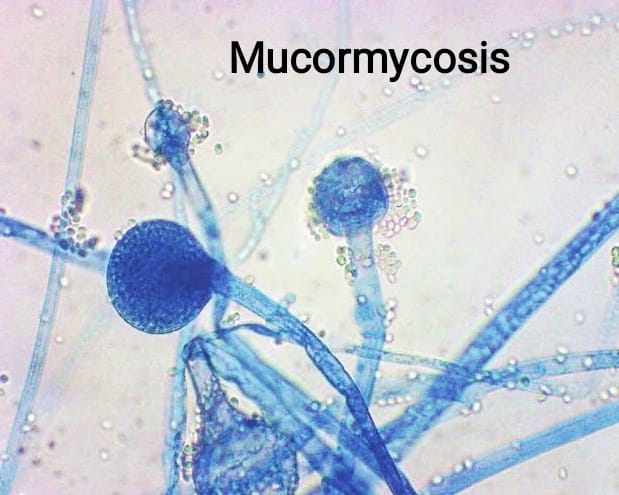
Mucor has been known to cause disease in humans since 1855.
Mucormycosis is the term given to the infection and disease caused by mucor in humans.
It is an “opportunistic infection”, that is, it typically affects people with a weak immune system like patients of HIV/AIDS, diabetes, cancer, long standing steroid therapy, etc…
Healthy individuals may unknowingly harbor the fungus on their body without actually suffering from the disease.
Mucor is notorious for entering the blood vessels (also called angio-invasive) and rapidly destroying body tissues. Thus, mucormycosis becomes a medical emergency.
COVID-19 & Rise of Mucormycosis
COVID-19 makes a particularly suitable environment for mucor to cause disease through the following three ways:
1. Steroids are used in COVID-19 treatment to tackle the “cytokine storm” which is basically our immune system in overdrive. Steroid treatment help by suppressing the immune system, in turn allowin